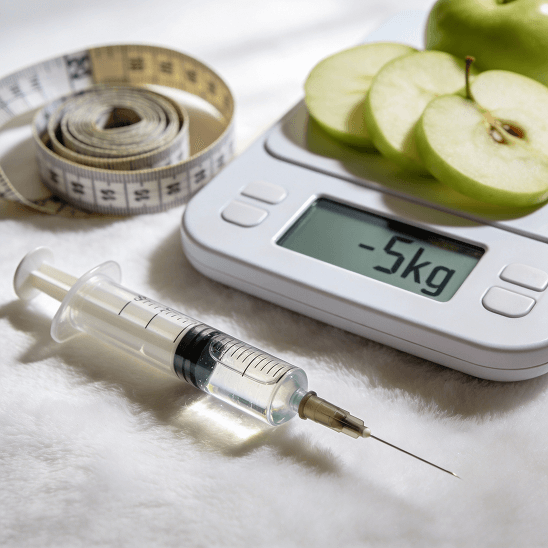

Over recent years, weight loss injections have become an increasingly popular method for people looking for weight loss treatments. But how do weight loss injections work, and are they effective compared to traditional methods? In this article, we explore the science behind these injections, the types of weight loss injections available, the benefits and the risks.
Weight loss injections are prescription-only medications that are administered with a pre-filled 'pen' that features a small, very fine needle that is injected into the skin. Unlike over-the-counter diet pills, these injections work by targeting hormones that regulate appetite, fullness, and blood sugar. They are primarily prescribed for people with type 2 diabetes or those who have struggled to lose weight through diet and exercise alone. While not a magic solution, they are designed to complement healthy lifestyle changes, helping users achieve meaningful, sustained weight loss.
For more information on safe weight management, visit NHS England's guide to weight management.
A number of prescription injections have become well-known for their ability to support weight loss:
Each injection type can vary in how often they're taken, how effective they are, and the potential side effects they may cause. But they do all work in a similar way; by influencing the hormones that regulate your appetite.
Weight loss injections primarily work by activating your appetite-regulating hormones, particularly GLP-1 (glucagon-like peptide-1) and, in some cases, GIP (glucose-dependent insulinotropic polypeptide). These hormones signal the brain to reduce hunger, increase feelings of fullness, and slow down gastric emptying. By affecting these hormonal pathways, injections can help reduce calorie intake naturally. Instead of forcing dietary restriction, they help the body feel satisfied with smaller meals, which can lead to gradual and sustainable weight loss.
There are a few different weight loss injections available in the UK, each working slightly differently but with the same goal: to help control appetite and support long-term weight management. Here's how they compare:
Wegovy (Semaglutide) mimics GLP-1, which slows digestion, increases feelings of fullness and lowers appetite. Wegovy is taken by administering an injection once a week using a pre-filled pen. This injection usually goes into the abdomen, thigh, or upper arm.
Wegovy is prescribed alongside a reduced-calorie diet and increased physical activity for adults with obesity (BMI ≥30), or overweight adults (BMI ≥27) with at least one weight-related condition (such as high blood pressure or type 2 diabetes). A study conducted by the New England Journal of Medicine found that participants using Semaglutide lost an average of 14.9% of their body weight across 68 weeks, compared to an average loss of 2.4% for those participants who had a placebo. These results came from the participants using Wegovy as well as positive lifestyle changes.
Mounjaro (or Tirzepatide) is a dual GIP and GLP-1 receptor agonist, which means it targets two hormones to improve appetite control and glucose metabolism. Mounjaro is taken in a similar way to Wegovy, in that it is a once-weekly injection using a pre-filled pen. Mounjaro is also only available with a prescription, obtainable by adults whose BMI is above 30, or above 27 alongside a weight-related health condition.
Studies suggest that tirzepatide may lead to even greater weight loss than semaglutide, with participants averaging a weight loss of 22.5% over 72 weeks. This study also found that participants showed significant improvements in blood sugar levels and cardiovascular risk factors.
Also known as Liraglutide, Saxenda also targets GLP-1, helping users feel fuller for longer and supporting gradual weight loss. Saxenda is taken using a daily injection using a pre-filled pen, usually taken at the same time every day.
Saxenda is only available with a prescription, which can be obtained from your GP or pharmacist if you meet specific criteria. To be approved for this weight loss medication, you must be over 18, and have a BMI above 30. Some patients will be accepted for this medication if their BMI is above 27 and they have a weight-related health condition.
A trial of over 3500 people found that participants taking Saxenda lost an average of 8% of their body weight after 56 weeks, compared with 2.6% in the placebo group. It is generally considered less potent than Wegovy or Mounjaro; however, it can still provide meaningful results when used consistently alongside diet and lifestyle improvements.
Semaglutide (Wegovy), tirzepatide (Mounjaro), and liraglutide (Saxenda) all work by targeting appetite-regulating hormones to reduce hunger and support weight loss, but they differ in their mechanisms, dosing, and effectiveness. Wegovy and Saxenda are both GLP-1 receptor agonists, while Mounjaro is a dual GIP and GLP-1 agonist, which may enhance weight loss further. Saxenda is usually injected daily, whereas Wegovy and Mounjaro are taken weekly.
Clinical studies suggest Mounjaro may lead to the greatest average weight loss, followed by Wegovy, with Saxenda showing more modest results. All three require a prescription and are most effective when combined with diet and lifestyle changes.
Curious if you're eligible for weight loss injections? Quickly check your BMI with the NHS BMI calculator.
Weight loss injections are proven to be highly effective in helping people to lose weight, but like all prescription medicines, they can cause side effects. These vary from person to person, and while many are mild and temporary, some may be more serious.
These often occur when first starting treatment or after increasing the dose, and they usually improve over time as your body adjusts:
Studies show that weight loss injections can lead to weight loss of up to 20% of body weight; however, research has suggested that some of the weight lost is non-fat mass, including muscle and bone. Maintaining muscle and bone is important for overall health, including blood sugar control and fracture prevention. Combining these medications with adequate protein intake and regular physical activity such as resistance training can help preserve muscle and bone, maximising the benefits of weight loss.
Each medication may have its own additional side effects, so be sure to review the side effect information provided with your prescription when starting treatment.
There are some circumstances where weight loss injections may not be suitable. Weight loss injections are not recommended for people who:
Mounjaro can sometimes affect how other medicines work, so it's important to tell your GP or pharmacist about everything you're taking before you start treatment. It may make low blood sugar more likely if used alongside other diabetes medicines such as insulin or sulfonylureas. Because it slows down digestion, it can also reduce how well some tablets are absorbed – this includes the contraceptive pill, certain blood-thinning medicines (like warfarin), heart medicines (like digoxin), and some epilepsy treatments. Other medicines, such as beta-blockers (which can hide the signs of low blood sugar), steroids (which can raise blood sugar), and some antibiotics, may also interact. Even some herbal remedies, like ginseng or fenugreek, can increase the risk of low blood sugar. For these reasons, your healthcare professional may recommend extra monitoring, dose changes, or alternative options to keep you safe.
Important note: Always consult your GP, pharmacist, or specialist before beginning treatment. If you experience severe side effects or symptoms that worry you, seek medical help immediately.
The studies done on weight loss injections also consider factors that can improve the results of taking them. Studies have found that weight loss injections are most effective when paired with healthy habits:
It's important to remember that weight loss injections are not a fix all solution, and they cannot replace a healthy lifestyle. Think of them as a tool, not a cure.
Before you are approved to take weight loss injections, you will need to be assessed by a pharmacist or GP to look into suitability. During this consultation, you will be asked about your medical history, current medications, and weight management goals before weight loss injections can be prescribed.
Yes, studies on weight loss injections have shown a substantial reduction in weight when combined with lifestyle changes. However, it is important to note that results can vary based on the individual and injection type used.
Typically, adults with a BMI of 30 or higher, or a BMI of 27 or higher with weight-related health issues such as type 2 diabetes, high blood pressure, or sleep apnoea, may be considered. A healthcare professional will also assess your medical history, current medications, and readiness to make lifestyle changes.
If you're considering taking weight loss injections, you may be wondering how long weight loss injections take to work. The exact time it takes to feel the effects of your weight loss injection after administering it can vary based on the type of medication and from person to person. Some people report feeling a change in appetite within hours of their first weight loss injection, and others don't feel the effects until they increase the dose. Most people notice reduced appetite and gradual weight loss within 4–6 weeks of consistent use.
When you stop taking weight loss injections, you may notice your appetite return to pre-treatment levels, which can lead to gradual weight regain if lifestyle habits aren't maintained. Maintaining a balanced diet, regular physical activity, and healthy behaviours are crucial to sustaining weight loss after stopping medication.
Getting weight loss injections on the NHS is generally restricted to people with obesity who meet specific clinical criteria, such as a BMI above 30 (or 27 with co-morbidities) and documented attempts at lifestyle interventions. In most cases, weight loss injections are more readily available privately.
How long a person stays on weight loss injections can vary depending on the medication, individual response, and ongoing health monitoring. Many people remain on weight loss injections for months to years, with regular reviews by a healthcare professional to assess effectiveness, side effects, and whether continuing the injection is appropriate.
Weight loss injections offer a scientifically backed method for supporting weight loss, especially for those struggling to do so with standard weight loss methods. Targeting appetite-regulating hormones will help to reduce calorie intake, making injections like semaglutide, tirzepatide, and liraglutide highly effective. However, as we have already highlighted, weight loss injections work best alongside diet, exercise, and ongoing medical supervision.
If you're considering weight loss injections, My Local Surgery offers a convenient and discreet way to access weight loss treatments like Mounjaro (tirzepatide) from the comfort of your home. Simply complete a confidential medical questionnaire and schedule a free video consultation with one of our pharmacists. During this face-to-face call, you can ask questions and discuss any concerns. Once approved, your medication will be delivered directly to your door, making the process simple.