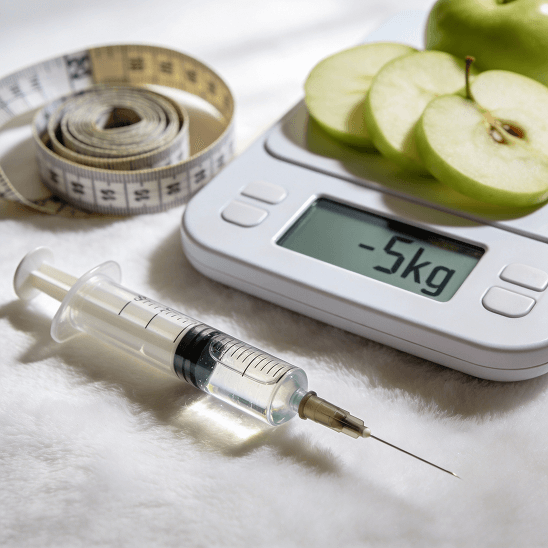

Set your expectations first. Some effects are quick; others build with each dose increase. You may notice an appetite shift within days, but visible weight loss usually appears between weeks 4 and 8 as your dose increases.
Over 12–18 months, if you stay on a higher maintenance dose and keep up healthy habits, you can expect average weight reductions of 15–21%, with steadier progress and results that last longer than quick-fix diets.
Mounjaro contains tirzepatide, a dual GIP/GLP-1 receptor agonist, which works by lowering blood sugar, reducing appetite, and slowing how quickly your stomach empties. So, you feel full sooner, and for longer. That stomach-emptying effect is strongest after your first dose, which explains why you often notice appetite changes in the very first week.
How it acts in your body:
To keep side-effects manageable, you usually start on 2.5 mg once weekly for the first four weeks. If tolerated, the dose is then increased by 2.5 mg every four weeks. Most people move on to maintenance doses of 5, 10, or 15 mg. That’s why you may feel appetite changes early on, but visible weight change often becomes clearer once you step up beyond week four.
| Time on treatment | Usual dose | What it’s for |
|---|---|---|
| Weeks 1–4 | 2.5 mg | Get used to the medicine; minimise nausea/indigestion |
| Weeks 5–8 | 5 mg | Begin “working dose” for many people |
| Weeks 9–12 | 7.5–10 mg | Stronger appetite control; weight change is clearer |
| 12 weeks+ | 10–15 mg | Longer-term results and maintenance |
If you accidentally miss a dose, you can still take it within 4 days of the missed injection. If more than 4 days have already passed, skip it and continue again on your usual day.
Your results depend on things like starting BMI, diet quality, daily activity, and how your dose is escalated. Here’s how Mounjaro weight loss by week often unfolds, based on clinical trial data and patient reports:
Appetite: When Mounjaro starts to work on appetite, you may feel full more quickly and notice you’re snacking less within a few days. This is partly because Mounjaro slows how fast food leaves your stomach after the first injection.
Weight: Don’t worry if the scales barely move yet (often <1 kg). Clothes usually feel the same at this point.
Symptoms: Nausea, diarrhoea, or constipation are common. You might also notice heartburn or bloating. Smaller, plainer meals and steady fluids usually help during this period.
Habit to try: Add protein to every meal (yoghurt, eggs, tofu, chicken) and sip water often. It helps you stay satisfied and hydrated.
Dose: Most people increase from 2.5 mg to 5 mg at week four.
Weight: Typical results at 4 weeks are around 1–2 kg of weight loss, depending on lifestyle and dosing. You’ll often find smaller portions are finally “enough.”
Symptoms: If nausea shows up after the dose increase, go back to gentler foods like porridge, soups, or plain crackers, and avoid rich or fried meals until you settle.
Weight: By this stage steady weight changes will be noticeable. Many people are down 3–4 kg in total (around 5%).
Blood sugar: If you have type 2 diabetes, you’ll likely see marked improvements in glucose control as doses rise. This has been consistent across SURPASS trials.
Lifestyle focus: This is the best time to build routine activity. Brisk walking most days plus resistance training twice a week. Both help preserve muscle and keep your metabolism strong. NHS resources offer simple, sustainable plans.
Dose: By now, you may be on 7.5–10 mg if you’ve tolerated earlier steps.
Weight: A total loss of 5–6 kg (about 8–9% of starting weight) is realistic for many people at this point.
Day-to-day: Appetite often feels “quieter,” energy is more stable, and meals easier to manage. Keep prioritising protein-first meals and consistent movement.
The biggest trials show how results add up:
If you stay on treatment, titrate to the right dose, and stick with your diet and activity changes, you could realistically achieve a 15–21% average weight loss at 12–18 months. The earlier months (1–3) are when you start to notice progress, but the long-term commitment is what secures the biggest results.
You may notice digestive issues like nausea, diarrhoea, constipation, or indigestion, especially when you first start and when your dose increases. In trials, about half of participants reported these symptoms, but they usually settled over time.
If you develop severe abdominal pain, repeated vomiting, dehydration, or symptoms that worry you, contact your prescriber straight away. Your patient leaflet has more details.
Your results won’t look identical to someone else’s. A few key factors shape how quickly you notice changes:
There are simple steps you can take to get the best from your treatment without overcomplicating your routine:
Clinical trials show that Mounjaro starts affecting appetite within days. The early effect is linked to delayed gastric emptying after the first dose, although this response fades as your body adapts. Doses are usually increased by 2.5 mg every four weeks, with maintenance set between 5 and 15 mg.
Over the long term, results build steadily. At 72 weeks, people taking Mounjaro alongside diet and activity changes lost an average of 15–21% of their starting weight, depending on the dose. These outcomes are consistently higher than placebo groups.
One important finding is what happens when you stop treatment. Studies show that weight is often regained, while those who continue tend to maintain or even add to their loss.
Mounjaro starts to affect appetite within a few days of the first injection. Most people notice reduced hunger or cravings in the first week. Visible weight loss usually follows later, often between weeks 4 and 8, as doses increase and your body adjusts to the medicine.
During week one, many people feel less hungry, and you may find smaller meals more satisfying. Weight change is usually small at this stage, often less than a kilogram. Some patients experience nausea, bloating, or tiredness, which usually improve over time. Eating bland meals and drinking water can help.
By the end of the first month, many patients lose between 1 and 2 kilograms, though results vary. Early progress depends on your diet, exercise, and whether the dose has increased to 5mg. Appetite control is often stronger by this point, and you might notice clothes beginning to fit differently.
Although appetite changes begin quickly, most people see meaningful weight-loss results from weeks 4 to 8 onwards. At this stage, the dose is usually higher, and your body has adjusted. Steady, gradual weight loss is more sustainable than rapid change and is what clinical trials typically report.
The 2.5mg dose is designed as a starting point to reduce side effects while your body adapts and is not considered a maintenance dose for weight loss. Most patients need to increase gradually to 5mg or more for effective results. Your prescriber will guide safe dose escalation.
For people with type 2 diabetes, blood sugar levels may improve within the first few weeks. This is because Mounjaro stimulates insulin release and slows digestion. Clinical studies show significant reductions in HbA1c within 8 to 12 weeks, especially when the dose is steadily increased under supervision.
If you miss a dose, take it as soon as you remember if it’s within four days. If more than four days have passed, skip it and continue with your regular schedule. Never inject two doses close together. Contact your prescriber or pharmacist if you are uncertain.
Plateaus are common after several months on treatment. Reviewing diet quality, adding resistance exercise, and improving sleep can help restart progress. Sometimes a dose adjustment is needed if tolerated. Staying consistent with healthy routines usually allows weight loss to continue gradually and makes results easier to maintain.
Mounjaro is rarely used with other weight-loss injections such as semaglutide. Combining similar drugs increases side effect risks and has little proven benefit. If your progress is slower than expected, your clinician may suggest lifestyle adjustments or consider different medicines. Always check with a healthcare professional before combining treatments.
Mounjaro is usually taken long term, as obesity is a chronic condition. Studies show that stopping often leads to weight regain, while continuing helps maintain progress. The exact duration depends on your health, goals, and tolerance, so ongoing review with your prescriber is essential for safe decisions.
Clinical trials lasting up to 72 weeks show that Mounjaro is effective and generally well tolerated. Most side effects occur early and settle over time. Long-term safety data is still being gathered, but ongoing monitoring with your prescriber helps ensure any issues are identified and managed promptly.
Mounjaro isn’t right for everyone (e.g., certain GI conditions, history of pancreatitis, or if you can’t tolerate side-effects). Your clinician may discuss semaglutide options and non-medication routes, including NHS programmes.
If you’re considering Mounjaro based purely on when you’ll see results, expect fast appetite change then steady weight loss after week 4. Longer term, average reductions of 15–20% are achievable when consistent dosing is paired with healthy habits.
If you’re ready to see how this could fit into your own journey, My Local Surgery can help with a Mounjaro prescription. Our team provides safe prescribing, regular reviews, and ongoing support so you’re never left to figure it out alone. Start your confidential assessment today and take the next step toward sustainable results with Mounjaro.